
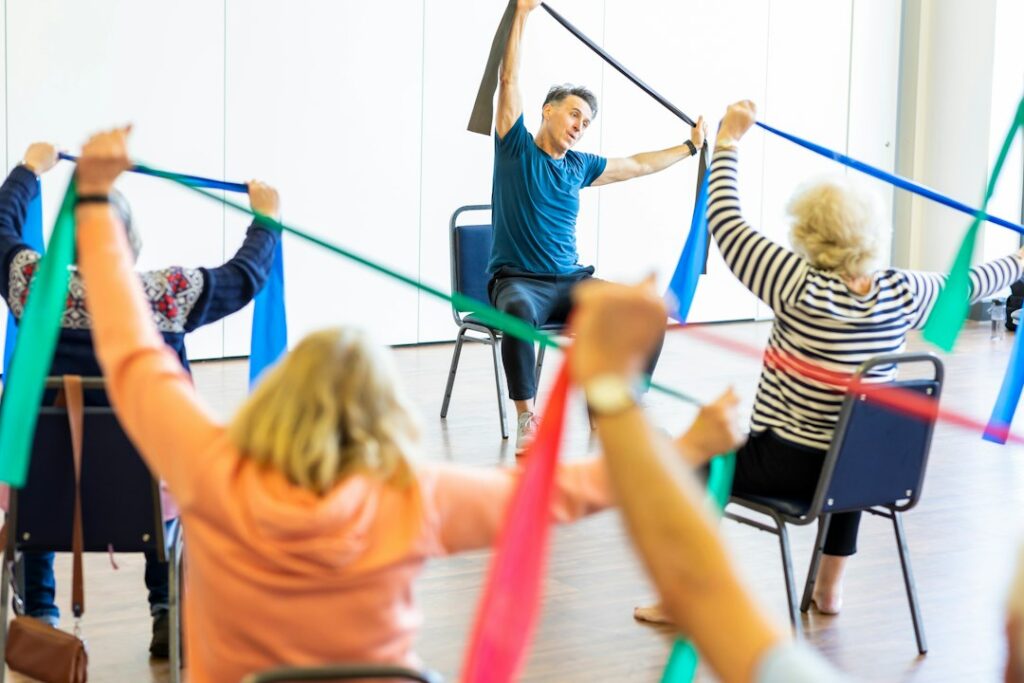
Assisted living activities are meant to support more than entertainment. A well-planned recreation program can help residents maintain movement, social connection, confidence, memory, creativity, and a sense of purpose while respecting different interests and abilities.
For residents and families in Carbondale, PA, the most useful activity program is not necessarily the busiest one. It is a program that offers meaningful choices, adapts to changing needs, and makes participation feel comfortable rather than required.
What kinds of activities are offered in assisted living?
Assisted living communities generally offer a mix of social, physical, creative, educational, spiritual, and recreational activities. The schedule may include both group programs and quieter options for residents who prefer individual or small-group participation.
Common examples include:
- Chair exercises, stretching, balance practice, and walking groups
- Card games, puzzles, trivia, and board games
- Arts and crafts, painting, sewing, or seasonal projects
- Music programs, sing-alongs, dancing, and listening sessions
- Book discussions, current-events conversations, and educational presentations
- Cooking demonstrations, baking activities, and gardening
- Movie afternoons and themed social events
- Religious or spiritual gatherings for residents who request them
- Birthday celebrations, holiday programs, and family events
- Outdoor sitting, gardening, bird-watching, and nature observation
Activities should be varied enough that residents can find something enjoyable even if they are not interested in traditional games or large social events.
How do activities benefit older adults?
Regular activities can help reduce isolation, maintain routines, and give residents reasons to look forward to the day. They may also support physical function and emotional well-being.
Physical activities can help residents practice strength, flexibility, coordination, and balance. They are not a substitute for individualized medical or rehabilitation care, but gentle movement can complement those services when approved for the resident’s abilities.
Social activities create opportunities for conversation and friendship. This can be especially helpful after a move, when familiar routines and social contacts may have changed.
Creative and cognitive activities provide stimulation without making residents feel as though they are being tested. Completing a craft, recalling a familiar song, or participating in a discussion can support confidence and self-expression.
Purpose is another overlooked benefit. Folding napkins for an event, watering plants, helping choose music, or welcoming a new resident may give someone a meaningful role within the community.
Are residents required to participate?
Residents should not be pressured to join every activity. Participation is generally voluntary, and preferences can change from day to day.
A resident may enjoy a large music program one week but prefer a quiet puzzle or conversation the next. Fatigue, pain, medication effects, mood, hearing changes, or sleep patterns can all affect interest in activities.
A healthy program offers alternatives, such as:
- A smaller group instead of a large gathering
- A seated version of an active program
- A quieter location for residents sensitive to noise
- Individual activities for people who do not enjoy groups
- Shorter sessions for residents with limited attention or stamina
- Familiar activities for residents living with memory loss
The goal is not to fill every hour. It is to provide opportunities that match the resident’s comfort, abilities, culture, history, and preferences.
How are activities adapted for residents with memory loss or physical limitations?
Good recreation programs adapt the activity rather than excluding the resident. Directions may be simplified, materials may be prepared in advance, and the activity may focus on enjoyment instead of completing a specific task.
For a resident with memory loss, familiar music, folding towels, sorting objects, looking through photographs, or discussing past hobbies may be more comfortable than a complex game with multiple rules.
For someone with limited mobility, activities can be brought to the resident’s room or offered at a table with appropriate seating. A resident who cannot walk to an outdoor area may still participate in gardening through container plants or indoor plant care.
Sensory considerations also matter. Bright lighting, background noise, crowded rooms, or fast-paced instructions may make participation difficult. Staff should watch for signs of frustration, fatigue, or overstimulation and adjust the setting when needed.
Families can help by sharing information about a resident’s former work, hobbies, favorite music, cultural traditions, and preferred conversation topics. These details often lead to more meaningful activities than a general list of interests.
What should families ask about an activity calendar?
A calendar can look full while offering limited choices, so families may want to ask how activities work in practice. Useful questions include:
- Are activities offered every day, including weekends?
- Are there both morning and afternoon options?
- How are residents informed about schedule changes?
- Can residents suggest new activities?
- Are programs available for people who prefer small groups?
- How are activities adapted for hearing, vision, mobility, or memory needs?
- Are outdoor activities available during suitable weather?
- How are residents supported if they want to attend but need assistance getting there?
- Are family members allowed to participate in certain programs?
- How does staff learn whether an activity was enjoyable or useful?

In a place with cold winters, snow, and changing outdoor conditions, indoor programming is especially important. Residents may appreciate indoor walking, exercise, music, games, and social gatherings when outdoor access is limited. During warmer months, shaded seating and brief outdoor activities can provide a change of scenery without requiring strenuous travel.
What if a resident says there is nothing to do?
A resident who says there is nothing to do may mean that the available choices do not feel personally meaningful. The issue may not be the number of activities but the fit.
Some residents dislike competitive games, crafts, or large gatherings. Others may not recognize an activity as something they can join because the invitation is unclear or transportation within the building is difficult.
Families and staff can explore specific questions:
- What did the resident enjoy before moving?
- Did the resident prefer working with hands, talking, reading, music, nature, or helping others?
- Would the resident participate more comfortably with one familiar person?
- Is the activity scheduled at a time when the resident is usually tired?
- Are hearing, vision, pain, or mobility problems creating a barrier?
- Would the resident enjoy helping with an activity rather than simply attending?
A person who refuses bingo may still enjoy sorting photographs, listening to familiar music, watching a cooking demonstration, or helping arrange flowers.
How can residents maintain independence through recreation?
Recreation can support independence when residents are offered choices and meaningful responsibilities. Independence does not always mean doing an activity without help. It can also mean choosing the activity, setting the pace, deciding whether to continue, or contributing in a small but valued way.
Residents may be able to:
- Choose between two activities
- Help select a movie or music program
- Assist with decorating a common area
- Water plants or arrange materials
- Share a favorite recipe, story, or skill
- Invite another resident to join a game or conversation
- Decide whether to participate in a group or individual activity
The most effective programs treat recreation as part of daily life, not as a performance schedule. Activities should help residents remain connected to their interests, relationships, surroundings, and personal history while allowing room for rest, privacy, and changing needs.
